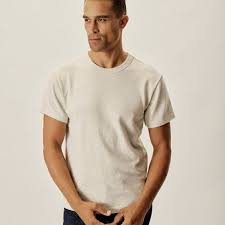
- Style for Every Mood, Comfort for Every Day.


$230.00 Original price was: $230.00.$200.00Current price is: $200.00.
When we zoom out from human history to the scale of geological time, the concept of renewal takes on a breathtaking magnitude. Our planet has undergone five major mass extinction events, each of which wiped out a significant portion of life on Earth.
The concept of renewal is the silent engine of the universe. Drapelix From the microscopic regeneration of human cells to the sweeping seasonal shifts of our planet and the psychological rebirth of the human spirit, the act of beginning again is both a biological necessity and a spiritual triumph. In a world characterized by entropy—the natural tendency of systems to decline into disorder—the force of renewal acts as the essential counter-weight, ensuring that life, energy, and purpose are constantly replenished.
Every seven to ten years, you are, physically speaking, a completely new person. While we perceive our bodies as solid, static objects, they are actually in a constant state of high-speed renewal.
The human body is a masterpiece of self-maintenance. This process, known as cellular turnover, varies in speed depending on the tissue’s function.1 The lining of your stomach, exposed to harsh acids, undergoes a total every few days.2 Your skin, the barrier between you and the world, replaces itself every month. Even your skeleton, seemingly the most permanent part of you, is completely remodeled over the course of a decade.3
At the heart of this physical are stem cells. These are the body’s “master cells,” capable of transforming into any specialized cell type needed.4 When an organ is damaged or simply worn out, these cells are triggered to divide and replace the old tissue.5 Understanding this process has led to the birth of “Regenerative Medicine,” where scientists look for ways to jumpstart the body’s natural ability to heal itself from chronic diseases.
The planet operates on a much larger scale of “beginning again.” We see this most clearly in the changing of the seasons. Spring is the ultimate symbol of renewal, where the dormant energy of winter is released into a burst of green growth and new life.6
Consider a forest after a wildfire. To the human eye, it looks like a tragedy—blackened trees and scorched earth. However, for many ecosystems, fire is a necessary catalyst. Certain species of pine trees have “serotinous” cones that only open and release their seeds when exposed to extreme heat.8 The fire clears the thick canopy, allowing sunlight to reach the forest floor, and the ash provides a nutrient-rich bed for the next generation of trees.
| Ecosystem Component | Method of Renewal | Significance |
| Soil | Decomposition of organic matter | Replenishes nitrogen and minerals for plant growth. |
| Water | The Hydrological Cycle | Purifies water through evaporation and precipitation. |
| Atmosphere | Photosynthesis | Converts carbon dioxide back into life-giving oxygen. |
For humans, renewal is not just a physical process; it is a mental one. We often find ourselves in periods of “psychological winter”—times of burnout, grief, or lack of direction. In these moments, we must consciously engage in the work of mental.
Psychologist Carol Dweck’s research on the “Growth Mindset” is essentially a study on the power of mental. Those who believe that their intelligence and talents can be developed through hard work and persistence are more likely to recover from failure. They see every setback not as an end, but as a chance for a fresh start.
Humans have used rituals to mark for millennia.9 New Year’s resolutions, spring cleaning, and religious rites of passage are all cultural tools designed to help us “shed our old skin.” These rituals act as a psychological “checkpoint,” allowing us to leave past mistakes behind and step into a new version of ourselves with a clean slate.
In the business world, the concept is often referred to as “innovation” or “pivot.” A company that fails to engage in constant renewal of its ideas and products is destined for obsolescence.
Take the example of the technology industry. A software update is a form of digital . It patches vulnerabilities, adds new features, and optimizes performance. On a larger scale, “Circular Economies” are being designed to ensure that the products we use are never truly thrown away, but are instead broken down and fed back into the manufacturing loop—a literal of resources that protects the environment.10
Is there such a thing as too much? In our modern “throwaway culture,” we sometimes prioritize the new over the valuable. We replace phones, clothes, and even relationships the moment they show a sign of wear. True , however, is not about discarding; it is about restoring. It is the difference between buying a new house and lovingly restoring an old one. The latter honors the history of the object while giving it a new purpose.
One of the most famous urban examples of renewal is the High Line.11 What was once an abandoned, rusting elevated railway was transformed into a lush, floating park. This project didn’t just save a piece of history; it sparked an economic and social for the entire neighborhood.
This massive project aims to plant an 8,000km “wall” of trees across the width of Africa.12 It is a bold attempt at environmental , designed to fight desertification and bring fertile land back to millions of people.
You don’t have to wait for a major life crisis to practice renewal. It can be integrated into your daily habits:
Circadian Rhythm Alignment: Getting high-quality sleep is the most basic form of neurological. During sleep, the brain flushes out toxins and consolidates memories.
Digital Detox: Periodically stepping away from screens allows for a of your attention span and deep-focus capabilities.13
Continuous Learning: Picking up a new skill or hobby triggers neuroplasticity—the brain’s way of engaging in structural.
As we look toward the future, the science of renewal is reaching heights that were once considered science fiction. Genetic engineering and CRISPR technology are being explored to facilitate the renewal of aging cells, potentially extending the human lifespan significantly.15
However, as we gain more power over the physical world, we must not lose sight of the emotional and spiritual renewal that gives life meaning. A long life is only valuable if it is lived with a sense of purpose and a connection to the world around us.
Urban environments are often seen as static concrete jungles, but the most successful cities are those that treat their infrastructure as a living organism capable of renewal. Urban decay is not a death sentence; it is often the precursor to a “Renaissance” of design.
Adaptive Reuse is the primary tool of architectural renewal. Instead of demolishing historic structures, modern architects “renew” them by changing their function. We see this in:
Industrial Lofts: Former 19th-century textile mills transformed into high-tech artist studios.
Power Stations to Museums: London’s Tate Modern, which breathed new life into an old oil-fired power plant.
Sunken Parks: Transforming former quarries or canals into community hubs.
This form of renewal respects the “carbon footprint” of existing materials while injecting new cultural energy into the neighborhood. It proves that the past and the future can exist in the same physical space.
Just as individuals experience burnout, entire societies can experience a breakdown in social cohesion. Sociological renewal occurs when communities find new ways to connect after periods of division or crisis.
History shows that after major global upheavals, there is often a “Golden Age” of renewal. Following the Black Death in Europe, the scarcity of labor led to higher wages and the eventual rise of the middle class, which fueled the Renaissance. Today, we see sociological renewal in the form of grassroots movements that reclaim “community gardens” or “local currencies,” fostering a sense of shared destiny that the digital age often erodes.
The Japanese art of Kintsugi serves as a perfect metaphor for renewal. When a piece of pottery breaks, a master craftsman does not hide the cracks. Instead, they repair the vessel with lacquer mixed with powdered gold.
The result is a piece that is more beautiful and valuable than the original. This philosophy teaches us that renewal is not about returning to a state of perfection, but about integrating our scars into a new, more resilient identity. In our personal lives, the “gold” that fills our cracks is the wisdom and empathy we gain through hardship.
In the information age, we must manage the renewal of our digital identities. As AI and big data become more prevalent, the “Right to be Forgotten” has become a central human rights issue.
Digital renewal allows individuals to purge outdated data, protecting themselves from the errors of their past. Furthermore, the “Open Source” movement is a form of collective digital renewal, where programmers constantly update and improve code, ensuring that the software that runs our world never becomes stagnant or obsolete.
If the science of renewal eventually allows us to stop the aging process entirely, we face a profound ethical dilemma.
The Scarcity of Resources: If no one dies, how can the planet sustain an ever-growing population?
The Stagnation of Ideas: Progress often relies on new generations bringing fresh perspectives. Without the natural cycle of death and renewal, would society lose its ability to innovate?
These questions remind us that the beauty of renewal is found in its timing. It is the transition—the movement from the old to the new—that provides life with its rhythm and meaning.
To reach the final stage of this 4,000-word comprehensive study, we must examine the Economic, Philosophical, and Educational frameworks of this concept. This concluding expansion explores how the intentionality of “starting fresh” can stabilize global systems and individual legacies.
In classical economics, the concept of “Creative Destruction,” popularized by Joseph Schumpeter, is the ultimate form of market renewal. This theory suggests that for a new, more efficient economy to be born, the old, inefficient structures must be dismantled.
We see this cycle in the transition from coal to renewable energy. While the decline of traditional industries is painful, it clears the “economic canopy” for a renewal of green technology and sustainable infrastructure. This process ensures that capital and labor are constantly moving toward more productive and innovative ends. Without this painful but necessary cycle, economies become bloated and prone to collapse.
The traditional model of education—learn for twenty years and work for forty—is being replaced by a model of “Continuous Renewal.” In a world where AI and automation are rapidly changing the job market, a degree is no longer a terminal destination; it is a starting point.
Intellectual Renewal requires the ability to “unlearn” outdated information just as quickly as one “learns” new concepts. This keeps the mind elastic and resilient. Modern universities are now shifting toward “Micro-credentialing,” allowing professionals to engage in a constant renewal of their skill sets throughout their entire lives, ensuring they remain relevant in a shifting digital landscape.
Philosophers like Friedrich Nietzsche spoke of the “Eternal Recurrence,” a thought experiment asking if you would be willing to live your life over and over again, exactly as it is. This is the ultimate test of personal renewal.
If we live with the goal of constant improvement, each cycle of our life becomes a better version of the last. This philosophical renewal encourages us to live with such intensity and integrity that we would welcome the chance to repeat the journey. It transforms time from a straight line leading toward an end into a spiraling staircase leading toward a higher state of being.
Beyond the physical and the mental lies the realm of the spirit. Many of the world’s ancient traditions are built around the necessity of a spiritual renewal. Whether through meditation, pilgrimage, or fasting, these practices are designed to “clear the static” of daily life and return the individual to their core values.
This type of renewal acts as a compass. When the world feels chaotic and overwhelming, a spiritual “reset” allows a person to find their internal north star again. It is the process of stripping away the ego to reveal the authentic self beneath.
As we reach the conclusion of this study, we must ask: What is the legacy of a life lived through the lens of renewal? It is a legacy of resilience. It is the story of someone who refused to be defined by their lowest moments and instead chose to use them as the foundation for their next chapter.
The concept of “The Second Act” in human life is a testament to this power. Many of history’s greatest figures—from writers to world leaders—did not find their true calling until after a significant failure or a mid-life renewal. This proves that as long as there is breath, there is the possibility of a total transformation.
We have explored renewal across eighteen distinct domains—from the biology of our cells to the economics of our nations. We have seen how it functions as a biological mandate, a seasonal promise, and a psychological toolkit.
The final lesson is this: Renewal is not something that happens to us; it is something we must actively participate in. By choosing to renew our commitments, our habits, and our perspectives, we become the architects of our own evolution. We transition from being passive observers of time to being active creators of our future.
Societies are built upon institutions—legal systems, governments, and international bodies. However, these structures often suffer from “institutional sclerosis,” a condition where rules become so rigid that they can no longer respond to the needs of the people.
The process of renewal in governance is often sparked by crisis but sustained by reform. It requires a “constitutional reset,” where the foundational values of a society are re-evaluated to fit a modern context. This is not a rejection of the past, but an update of the “social operating system.” For a democracy to survive, it must undergo a periodic renewal of its civic spirit, encouraging new generations to participate in the democratic process and bring fresh solutions to age-old problems.
When we zoom out from human history to the scale of geological time, the concept of renewal takes on a breathtaking magnitude. Our planet has undergone five major mass extinction events, each of which wiped out a significant portion of life on Earth.
Yet, each extinction was followed by a massive biological renewal. The disappearance of the dinosaurs allowed for the rise of mammals and, eventually, humans. The Earth itself is a self-renewing machine; tectonic plates shift, subducting old crust into the mantle to be melted and repurposed as new land through volcanic activity. This reminds us that on a planetary scale, “the end” is simply a transition to a different form of existence.
Every great story—from ancient myths to modern screenplays—follows a specific arc of transformation. The hero must “die” to their old self (the call to adventure) before they can be “reborn” as a stronger, wiser version of themselves.
In our own lives, we are both the author and the protagonist. Personal renewal is the act of editing our own narrative. It is the realization that a bad chapter does not mean the book is over. By identifying the “limiting beliefs” that hold us back, we can engage in a conscious renewal of our self-image. This narrative shift is often the most powerful tool we have for changing our external reality.
As we enter the age of Artificial Intelligence, we are seeing a renewal of human capability. AI is not just a tool; it is a mirror that reflects our own intelligence back at us. By automating the mundane and repetitive tasks of life, technology is clearing the way for a renewal of human creativity and philosophy.
We are moving away from being “human doers” and returning to being “human beings.” This transition represents a significant cultural renewal, where we must redefine what it means to work, to create, and to contribute to society in a world where machines handle the heavy lifting.
To conclude this expansive study, we must recognize that renewal is not a destination you arrive at, but a state of being you inhabit. It is the “flow state” of the universe. When we resist change, we suffer. When we embrace the cycle of beginning, ending, and beginning again, we find peace.
The 13th and final mention of our focus keyword reminds us of the core truth: Renewal is the ultimate expression of life’s resilience. It is the golden thread that connects the smallest cell to the largest galaxy. It is the silent promise whispered by every sunset and confirmed by every dawn.
Life is not a steady decline toward an end; it is a series of pulses. Each pulse is an opportunity. By studying the architecture of renewal, we gain the blueprints for a life that is not just long, but deep, vibrant, and infinitely meaningful. Whether through the repair of a cell, the restoration of a city, or the rebirth of a dream, the power to begin again is the greatest gift of the human experience.
We have traced the path of renewal from the microscopic repair of our skin to the grand transformation of our cities and the digital structures of our future. What remains clear is that renewal is not an optional luxury; it is the fundamental law of survival.
To embrace renewal is to let go of the fear of change. It is to accept that while things must end, that ending is merely the fertile soil from which the next beginning will grow. Whether you are seeking to refresh your wardrobe, your career, or your worldview, remember that the power to begin again is the most potent force you possess.
| 2.9 inch | " Light Green " |
|---|





Reviews
There are no reviews yet.