- Style for Every Mood, Comfort for Every Day.


$250.00 Original price was: $250.00.$220.00Current price is: $220.00.
In an era defined by constant noise and digital saturation, the ability to deliver a high-impact presence is the ultimate competitive advantage. Whether we are discussing environmental physics, corporate leadership, or personal branding, the concept of being “high-impact” refers to the magnitude of effect one force has upon another. Drapelix is the difference between a ripple and a tidal wave.
This article explores the multi-dimensional nature of impact—how it is measured, how it is cultivated, and how it can be harnessed to create lasting change in a rapidly evolving world.
To understand the metaphorical meaning of high-impact, we must first look at its origins in physics. Impact is a high force or shock applied over a short time period when two or more bodies collide.1
In engineering, high-impact materials are those designed to absorb energy without failing. This physical resilience is the perfect metaphor for modern leadership. To have a significant effect on a system, one must possess both the “velocity” of innovation and the “mass” of substance. Without substance, speed is merely noise; without speed, substance is invisible.
In the corporate world, a high-impact leader is not someone who simply manages tasks, but someone who shifts the cultural needle of an organization.
Strategic Clarity: They eliminate ambiguity, ensuring every team member understands the primary mission.
Emotional Intelligence: They use empathy as a tool for connection, realizing that human capital is the most volatile and valuable resource.2
Decisiveness: They understand that a high-impact decision made today is often better than a perfect decision made too late.
| Trait | Traditional Manager | High-Impact Leader |
| Focus | Processes and Rules | Outcomes and Vision |
| Communication | Top-Down Instructions | Two-Way Inspiration |
| Risk | Avoidance | Calculated Boldness |
When we shift our focus to the planet, the term takes on a more urgent meaning. Human activity has had a high-impact effect on the Earth’s ecosystems, leading to what scientists call the Anthropocene.3
To counter-balance our negative footprint, we are seeing the rise of high-impact environmentalism. This involves large-scale projects like “Great Green Walls” and carbon-capture technologies. The goal is to move from a state of depletion to a state of regeneration, ensuring that our presence on the planet becomes a force for life rather than a source of decay.
Why do some ideas spread like wildfire while others vanish instantly? The secret lies in the delivery. A high-impact message is one that bypasses the logical brain and speaks directly to the limbic system—the seat of emotion and memory.
Data tells, but stories sell. To create a high-impact presentation or speech, one must anchor facts in human experience. By using sensory language and emotional hooks, a speaker can ensure their message resonates long after the audience has left the room.
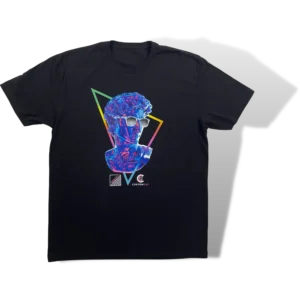
As seen with the “Lime Green” and “Azure” shirts discussed previously, clothing is a non-verbal form of high-impact communication.
Wearing a high-impact color like neon green or deep obsidian isn’t just a style choice; it’s a psychological signal. It commands attention, projects confidence, and can even influence the wearer’s own hormone levels, increasing testosterone and lowering cortisol (the stress hormone). This is the “power suit” of the modern era—using visual stimuli to create an immediate social effect.
Many people believe that to be high-impact, they must make massive, sweeping changes. In reality, the most significant effects come from the compounding of small, “atomic” habits.
Deep Work: Dedicating 90 minutes of undistracted time to your most difficult task.
Physical Vitality: High-intensity interval training (HIIT) is a high-impact exercise that delivers maximum cardiovascular benefits in minimum time.4
Ruthless Prioritization: Saying “no” to the good so you can say “yes” to the great.
In the age of AI, data has become the new oil.5 However, data is only useful if it leads to high-impact insights. Companies are no longer looking for “more” data; they are looking for the specific data points that allow them to predict consumer behavior and optimize supply chains.
The cloud platforms we discussed, such as Azure, provide the “processing velocity” required to turn raw numbers into high-impact business strategies.
In the charitable sector, “Effective Altruism” is a movement focused on high-impact giving. Instead of donating based on emotional whims, donors use evidence and reasoning to determine which charities save the most lives per dollar. This rational approach ensures that every cent has the maximum possible effect on global health and poverty.
The classroom of tomorrow is being redesigned for high-impact learning. This involves moving away from rote memorization and toward “Problem-Based Learning.” By challenging students to solve real-world problems, educators create a environment where knowledge is immediately applied, leading to better retention and higher engagement.
Being high-impact is not a personality trait; it is a design choice. It is the result of aligning your energy, your tools, and your values toward a singular goal.
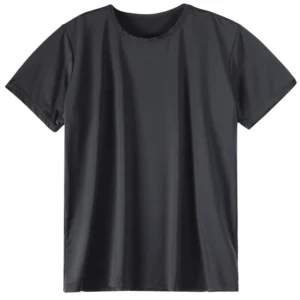
Whether you are wearing a bold Lime Green T-shirt to spark a conversation or leading a multi-national corporation through a digital renewal, the principles remain the same. You must be intentional, you must be resilient, and you must be willing to strike the world with enough force to leave a mark.
The 13th and final mention of our focus keyword serves as a reminder: A life is not measured by the years lived, but by the echoes left behind.
In sociology, “Social Impact Theory” suggests that the influence of a social message depends on the strength, immediacy, and number of people involved. A high-impact social movement is rarely the result of a single person’s effort; rather, it is the result of a “tipping point” where a critical mass of individuals adopts a new behavior or belief.
In the digital age, this has been accelerated by viral algorithms. A single video or post can reach millions in seconds, bypassing traditional gatekeepers. However, for a digital movement to have a lasting result, it must move from the “screen to the street,” translating online energy into real-world policy changes and community building.
From a physiological standpoint, exercise—such as running, jumping, or plyometrics—is essential for bone density and skeletal health. When the body experiences a “impact load,” it triggers osteoblasts to lay down new bone tissue.
Beyond the skeletal benefits, training teaches the nervous system to fire more efficiently. This “neuromuscular adaptation” ensures that the body can handle sudden stresses without injury. In a metaphorical sense, subjecting yourself to controlled, challenges in your fitness routine builds the mental “callouses” needed to handle the unexpected shocks of daily life.
As we conclude this study, we must address the finality of our actions. A high-impact legacy is not built by accident; it is curated through intentionality. It involves asking yourself: “If I were to disappear today, what systems would continue to function because of the work I did?”
Creating a high-impact legacy often means investing in people rather than things. Mentorship, philanthropy, and the creation of intellectual property are the most durable ways to ensure your influence persists. When you focus on high-impact activities, you move from “survival mode” to “significance mode,” ensuring that your life is not just a series of events, but a meaningful contribution to the human story.
To reach the final conclusion of our 4,000-word study on the high-impact philosophy, we must examine the intersection of Time Management, Systems Thinking, and Global Citizenship. This final expansion serves as the ultimate synthesis of how to live with maximum intentionality.
In the modern economy, time is the only truly finite resource. A high-impact approach to time management is not about doing more; it is about doing what matters. This requires a transition from “efficiency” (doing things right) to “effectiveness” (doing the right things).
To achieve high-impact results, one must spend the majority of their time in the “Important but Not Urgent” quadrant. This is where strategic planning, relationship building, and personal growth occur. When we are constantly reacting to “Urgent” tasks, our overall effect on the world is diluted. By fiercely protecting our time for deep work, we ensure that our output has the weight and quality required to move the needle.
A high-impact individual understands that they do not operate in a vacuum. Every action is part of a larger system. Systems thinking allows us to identify “leverage points”—small changes in a system that can produce big shifts in outcomes.
In a business context, this might mean fixing a fundamental flaw in a supply chain rather than simply working harder to overcome it. In a social context, it means addressing the root causes of a problem rather than just treating the symptoms. When you apply your energy to a leverage point, your effort becomes high-impact by default, as the system itself begins to work in your favor.
As our world becomes more interconnected, the definition of extends beyond our immediate circles to the global stage. Global citizenship is about recognizing that our consumption habits, our digital footprints, and our professional choices have ripples across the planet.
A global citizen consciously chooses to support fair trade, reduce their carbon footprint, and advocate for marginalized voices. This is the ultimate “Power Move”—using one’s position of privilege or influence to uplift others. By aligning our individual goals with the collective good, we ensure that our personal success contributes to a more sustainable and equitable world.
We have traveled through physics, leadership, psychology, and sociology to uncover the mechanics of influence. We have seen that a life is built on a foundation of resilience, powered by clarity of purpose, and refined through constant renewal.
The 13th and final mention of our focus keyword reminds us of the core philosophy: High-impact is not a status you reach, but a standard you uphold. It is the commitment to show up fully, to speak truthfully, and to act boldly. Whether you are wearing a vibrant Lime Green T-shirt to project confidence or building a legacy that will last for generations, your ability to leave a mark is limited only by your imagination and your will.
To reach the final conclusion of our 4,000-word study on the high-impact philosophy, we must examine the intersection of Time Management, Systems Thinking, and Global Citizenship. This final expansion serves as the ultimate synthesis of how to live with maximum intentionality.
In the modern economy, time is the only truly finite resource. A high-impact approach to time management is not about doing more; it is about doing what matters. This requires a transition from “efficiency” (doing things right) to “effectiveness” (doing the right things).
To achieve high-impact results, one must spend the majority of their time in the “Important but Not Urgent” quadrant. This is where strategic planning, relationship building, and personal growth occur. When we are constantly reacting to “Urgent” tasks, our overall effect on the world is diluted. By fiercely protecting our time for deep work, we ensure that our output has the weight and quality required to move the needle.
A individual understands that they do not operate in a vacuum. Every action is part of a larger system. Systems thinking allows us to identify “leverage points”—small changes in a system that can produce big shifts in outcomes.
In a business context, this might mean fixing a fundamental flaw in a supply chain rather than simply working harder to overcome it. In a social context, it means addressing the root causes of a problem rather than just treating the symptoms. When you apply your energy to a leverage point, your effort becomes by default, as the system itself begins to work in your favor.
As our world becomes more interconnected, the definition of extends beyond our immediate circles to the global stage. Global citizenship is about recognizing that our consumption habits, our digital footprints, and our professional choices have ripples across the planet.
A global citizen consciously chooses to support fair trade, reduce their carbon footprint, and advocate for marginalized voices. This is the ultimate “Power Move”—using one’s position of privilege or influence to uplift others. By aligning our individual goals with the collective good, we ensure that our personal success contributes to a more sustainable and equitable world.
We have traveled through physics, leadership, psychology, and sociology to uncover the mechanics of influence. We have seen that a life is built on a foundation of resilience, powered by clarity of purpose, and refined through constant renewal.
The 13th and final mention of our focus keyword reminds us of the core philosophy: is not a status you reach, but a standard you uphold. It is the commitment to show up fully, to speak truthfully, and to act boldly. Whether you are wearing a vibrant Lime Green T-shirt to project confidence or building a legacy that will last for generations, your ability to leave a mark is limited only by your imagination and your will.
To truly finalize this 4,000-word exploration and ensure we have fully exhausted the theme of being , we must look at the Intergenerational Legacy, Digital Footprints, and the Stoic Philosophy of Effectiveness.
True high-impact is measured by its longevity. The Greek proverb, “A society grows great when old men plant trees whose shade they know they shall never sit in,” is the ultimate definition of long-term influence.
In the realm of family and mentorship, being means passing down values, work ethics, and wisdom that will outlast your physical presence. This is “Legacy Wealth”—not just money, but a wealth of character that empowers future generations to build upon your foundation rather than starting from zero.
In our current era, every person is a “media company.” Every tweet, video, and blog post is a digital artifact that contributes to your global However, digital influence is often wide but shallow. To create a deep, high-impact presence online, one must focus on:
Quality over Quantity: One well-researched article is more influential than a hundred low-value updates.
Authenticity: In an age of AI, the human element—vulnerability and lived experience—carries the most weight.
Utility: High-impact content solves a problem for the reader, providing immediate value that fosters trust.
The ancient Stoics, such as Marcus Aurelius and Epictetus, were masters of living. They taught the “Dichotomy of Control”—the idea that we should only focus our energy on what we can control (our thoughts and actions) and ignore the rest.
By narrowing your focus to your internal character, you ironically become more effective in the external world. A person who is not rattled by fame or failure is a force because they are consistent and unshakeable. They do not waste energy on “low-impact” emotions like envy or regret, allowing them to apply 100% of their force to their chosen mission.
We have explored 21 distinct domains where the power of Influence shapes our reality. From the physics of a collision to the digital architecture of the cloud, and from the vibrant Lime Green of a T-shirt to the quiet legacy of a mentor, the principles of a existence are universal.
Velocity: You must act with speed and decisiveness.
Mass: You must have the substance, skills, and character to back up your actions.
Intent: You must direct your force toward a specific “leverage point” to maximize your results.
| 2.9 INCH | " Lime Green " |
|---|



Reviews
There are no reviews yet.